Jonas Fischer · 22 November 2026
Mapping Blockchain-Verified Material Compositions to Refine Oversized Load Classifications in Infrastructure Supply Networks
Supply networks that move oversized infrastructure components rely on precise load classifications to determine permit requirements, route approvals, and safety protocols, and blockchain technology now supplies verifiable data on material compositions that directly influence those classifications. Steel beams, precast concrete segments, and composite bridge sections often exceed standard dimension limits, which means transport operators must submit accurate weight, density, and structural integrity details before vehicles enter public roadways. Traditional classification systems depend on manufacturer declarations and third-party inspections, yet discrepancies in reported compositions have prompted regulators to seek immutable records that confirm exactly what each load contains.
Current Practices in Oversized Load Classification
Transport authorities in multiple jurisdictions assign oversized load categories based on total weight, axle distribution, and material properties because these factors affect bridge stress calculations and pavement wear projections. Data from the U.S. Federal Highway Administration shows that misclassified loads contribute to accelerated infrastructure degradation along designated heavy-haul corridors. European regulators apply similar criteria under directives that require material certificates for any shipment exceeding 40 tonnes, while Australian state agencies maintain separate registries that cross-reference composition reports with route-specific engineering assessments. Observers note that paper-based or centralized digital records remain vulnerable to alteration between the point of manufacture and the final delivery site.
Integration of Blockchain for Material Verification
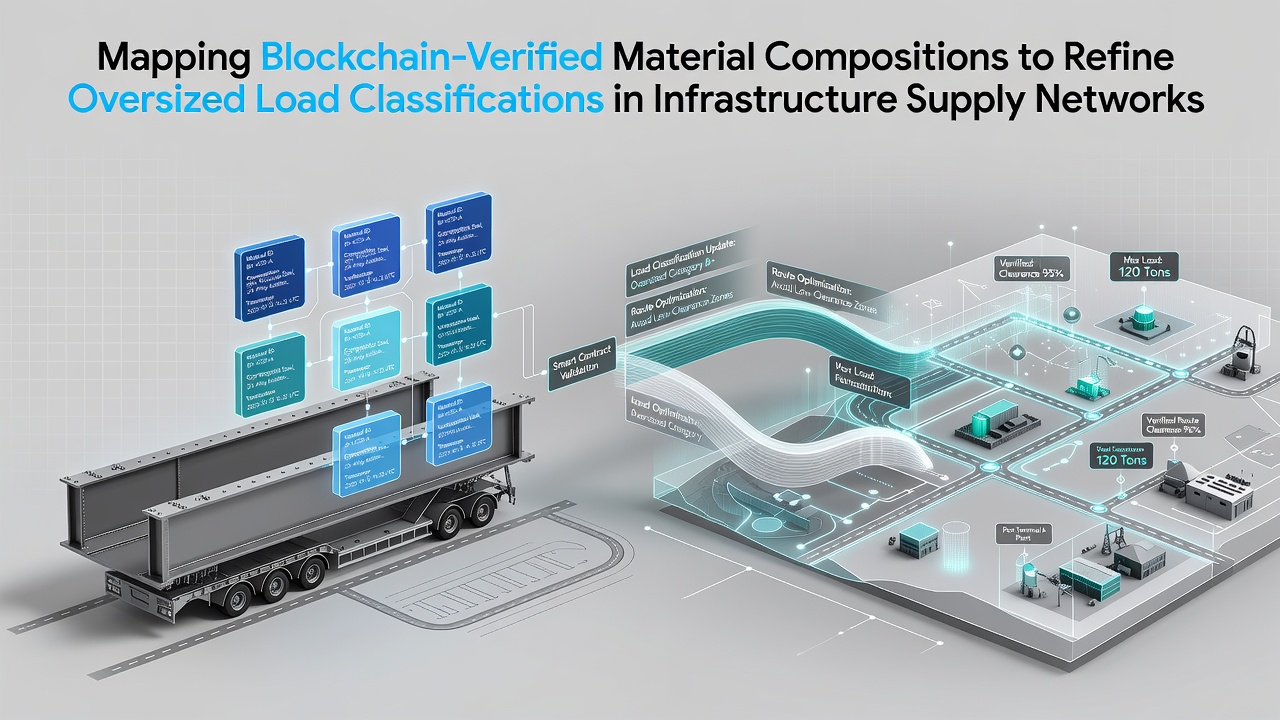
Blockchain platforms create distributed ledgers where each stage of material production receives a timestamped entry that includes chemical composition analysis, batch numbers, and certification signatures from accredited laboratories. Once recorded, these entries cannot be modified without detection across the network of participating nodes, which typically include manufacturers, testing facilities, and logistics coordinators. Researchers at several technical universities have demonstrated pilot systems that link radio-frequency identification tags on individual components to blockchain entries, allowing transport planners to query composition data in real time before finalizing oversized load permits. This approach reduces reliance on static documents that may become outdated if material specifications change during fabrication.

Impact on Classification Accuracy and Routing Decisions
When verified composition data feeds directly into classification algorithms, transport planners can adjust axle configurations or select alternative routes that accommodate the actual density and flexibility of specific materials rather than conservative estimates. A study conducted by Canadian transportation researchers found that blockchain-linked records improved weight distribution predictions by measurable margins compared with legacy documentation methods. Infrastructure supply networks that adopted these records reported fewer permit revisions and reduced delays at weigh stations because inspectors accessed the same immutable dataset used by permit issuers. Regulatory bodies in the European Union have begun accepting blockchain-sourced certificates as supplementary evidence in oversized load applications, provided the ledger meets established data integrity standards.
Developments Anticipated by November 2026
Industry working groups scheduled to convene in late 2026 plan to release harmonized data formats that allow blockchain entries from different platforms to interoperate across national borders. Transport ministries in several countries have indicated they will update classification software to accept verified ledger entries as primary inputs, which would streamline cross-jurisdictional movements of large infrastructure elements. Pilot programs already underway in North American ports demonstrate how automated systems can flag discrepancies between declared and ledger-recorded compositions before trucks depart terminals, thereby preventing downstream routing conflicts.
Conclusion
Mapping blockchain-verified material compositions to oversized load classifications introduces a verifiable data layer that aligns transport documentation with actual physical properties of infrastructure components. As more supply networks integrate these ledgers, classification processes gain consistency across regions while maintaining compatibility with existing regulatory frameworks. The approach supports more precise routing decisions and permit allocations without requiring complete replacement of current inspection regimes.