Frankie Lorenz · 27 September 2026
How Cargo Categories Shape Sustainable Packaging Choices in Modern Warehousing
Modern warehousing operations handle diverse cargo types that directly influence material selection, design specifications, and disposal pathways for packaging solutions, and researchers tracking these patterns note how categories such as hazardous materials, perishables, electronics, and bulk commodities each carry distinct requirements that push facilities toward targeted sustainable options. Data from industry reports shows that warehouses processing multiple cargo streams achieve measurable reductions in waste volume when packaging aligns precisely with cargo properties rather than applying uniform approaches across all shipments.
Defining Cargo Categories in Contemporary Logistics
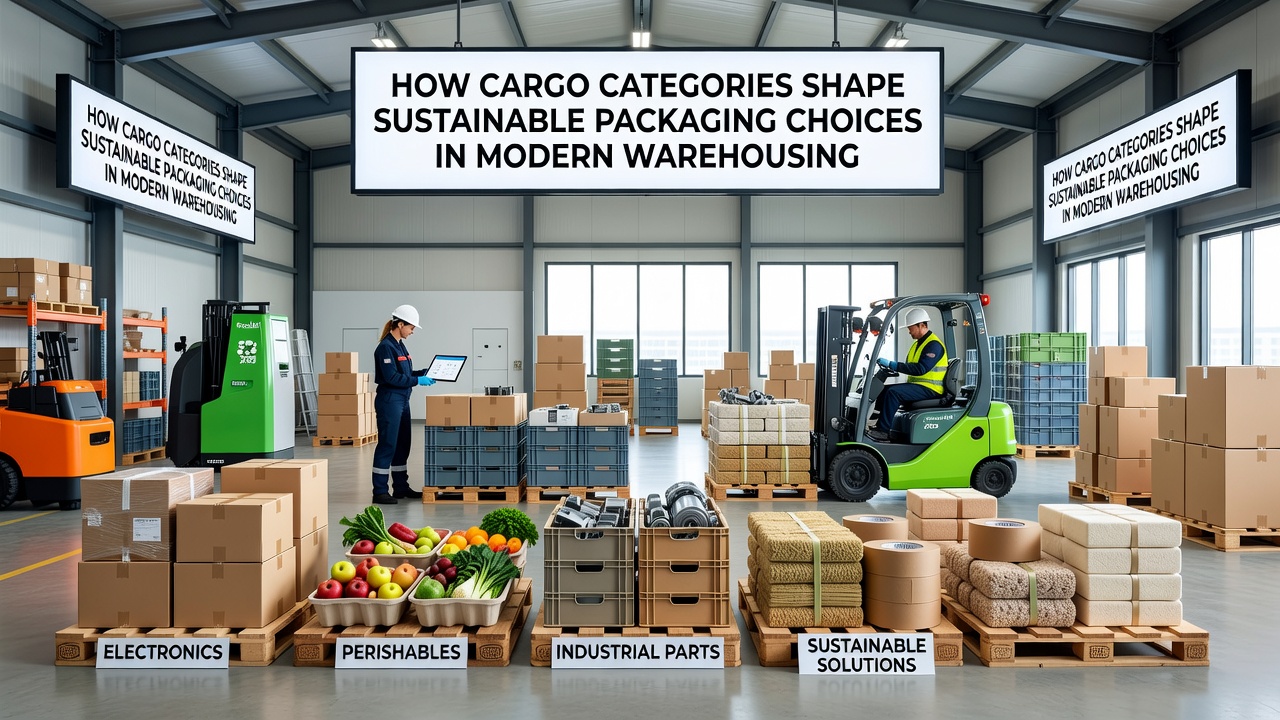
Cargo classification systems group items by physical traits, chemical stability, and handling needs, which in turn dictate the protective and containment features required during storage and transit. Hazardous substances demand barriers against leakage and reactivity, whereas fresh produce requires breathable yet moisture-controlled wraps that prevent spoilage while meeting compostability standards. Electronics shipments often involve anti-static layers combined with cushioning derived from recycled fibers, and bulk dry goods favor reusable totes constructed from high-density polyethylene that undergoes multiple cycles before recycling. Observers tracking warehouse throughput report that accurate category identification at intake reduces over-packaging incidents by directing staff toward the minimal material set that still satisfies safety and preservation criteria.
Material Selection Driven by Category-Specific Constraints
Facilities adjust polymer grades, fiber content, and closure systems based on cargo sensitivity to temperature fluctuations, vibration, and chemical exposure. Perishable categories push adoption of plant-based films that maintain gas permeability while degrading under industrial composting conditions, and studies from Canadian regulatory bodies indicate measurable drops in landfill contributions when these films replace conventional wraps for produce loads. Hazardous cargo categories trigger use of certified containment liners rated for spill resistance, often paired with outer shells made from recycled corrugated board treated for flame retardance. Electronics handlers integrate molded pulp inserts sourced from post-consumer paper streams, which deliver equivalent shock absorption to expanded foams yet allow straightforward reprocessing at end of life. Bulk commodity streams benefit from modular plastic pallets and sleeves designed for repeated return loops, cutting single-use plastic volumes according to figures released by the Australian Packaging Covenant Organisation.

Regulatory Frameworks Guiding Packaging Decisions
Government standards in multiple regions establish thresholds for recycled content, recyclability labeling, and restricted substances that warehouses must meet when packaging choices intersect with cargo categories. The European Commission maintains directives that require traceability documentation for packaging used with regulated substances, prompting facilities to adopt digital tagging systems that link each container to its cargo classification and material composition. United States Environmental Protection Agency guidelines encourage source reduction strategies tailored to cargo risk profiles, and facilities report streamlined compliance when packaging inventories are segmented by category rather than maintained as generic stock. Upcoming updates scheduled for September 2026 in several jurisdictions will expand disclosure requirements around packaging end-of-life pathways, which observers expect will accelerate adoption of mono-material designs that simplify sorting for recycling streams serving different cargo types.
Operational Integration and Efficiency Outcomes
Warehouses integrate category data into inventory management platforms so that packaging stations receive automated prompts matching each incoming shipment to approved sustainable options. This linkage reduces decision time at packing lines and minimizes mismatches that previously led to excess material use or rejected loads. Research from academic logistics programs demonstrates that category-aligned packaging systems improve space utilization within storage racks because consistent material profiles allow tighter stacking without compromising protection. Returns processing also benefits because standardized sustainable packaging for each cargo category facilitates quicker inspection and re-entry into reuse circuits rather than disposal. Facilities that maintain separate packaging workflows for fragile, temperature-sensitive, and inert cargo streams document lower overall material expenditure per unit shipped, according to aggregated industry benchmarks.
Conclusion
Cargo categories function as the primary variable shaping sustainable packaging strategies because each group imposes non-negotiable performance thresholds that generic solutions cannot satisfy efficiently. Warehouses that map these categories to material specifications, regulatory mandates, and operational workflows achieve consistent alignment between protection needs and environmental targets. Continued refinement of classification systems alongside advances in packaging substrates supports ongoing progress toward lower-impact logistics networks across global supply chains.