Blake Lorenz · 13 September 2026
Decoding Freight Labels: Uncovering Hidden Patterns in International Shipping Documentation
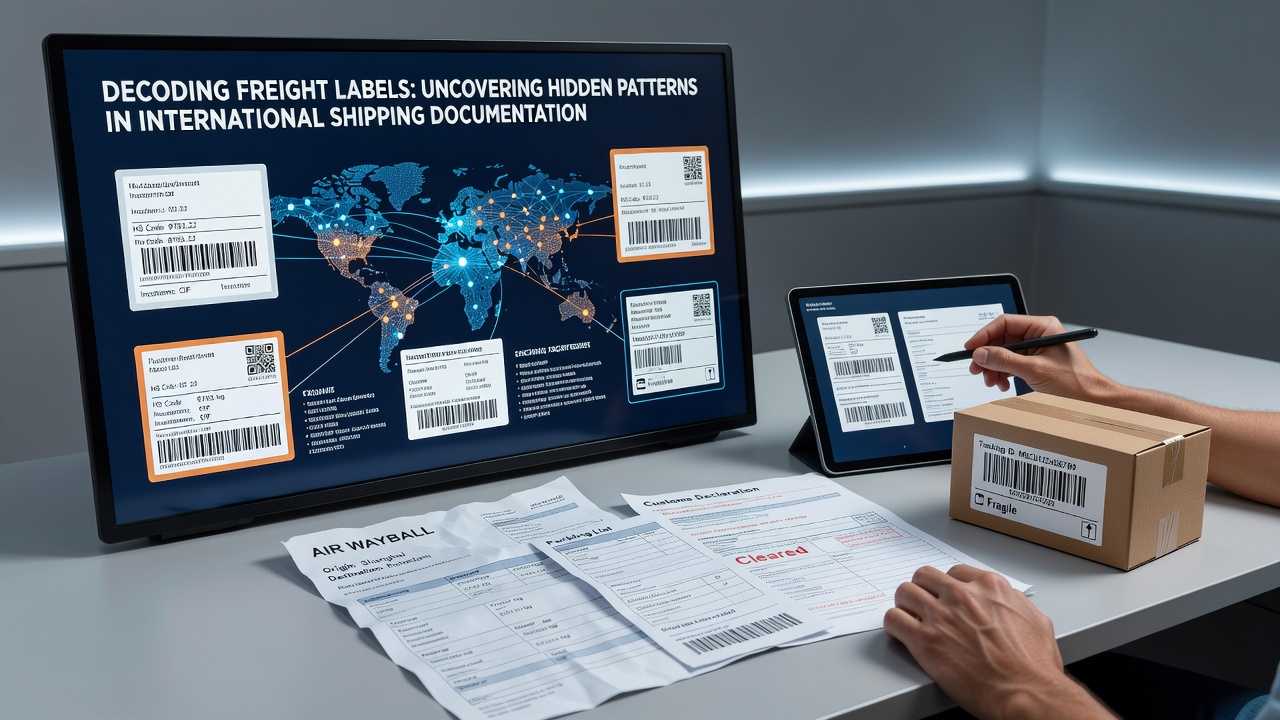
Freight labels serve as the primary interface between physical cargo and digital tracking systems in global trade, and observers note that these labels encode multiple layers of information through standardized formats that reveal shipment origins, destinations, and compliance status when examined closely. Researchers have mapped how barcodes, QR codes, and data matrices on these labels follow patterns established by international bodies, while alphanumeric sequences often incorporate check digits and regional identifiers that customs authorities use to flag anomalies during inspections.
Core Components of Freight Labels
Every international freight label contains mandatory fields that align with conventions set by organizations such as the International Air Transport Association and the World Customs Organization, and these fields include the shipper's details, consignee information, commodity descriptions, and handling instructions that together form the visible layer of documentation. Hidden within the same label are machine-readable elements where serial numbers follow manufacturer-specific sequences that indicate production batches, and those sequences often embed country codes or facility identifiers that allow supply chain analysts to trace items back through multiple tiers of suppliers without accessing separate databases.
Data from the U.S. Customs and Border Protection shows that labels must display harmonized system codes in precise positions, and these codes follow a six-digit structure that expands to ten digits in certain jurisdictions to capture additional tariff classifications. Patterns emerge when analysts compare labels across multiple shipments from the same exporter, because recurring digit combinations in the extended codes frequently correspond to product variants or packaging configurations that affect duty calculations.
Pattern Recognition in Documentation Layers
International shipping documentation extends beyond the physical label to include the bill of lading, commercial invoice, and packing list, yet the label itself functions as the initial filter that automated systems use to route records into risk-assessment queues. Observers have documented how date stamps on labels encode not only shipment dates but also expected arrival windows derived from carrier schedules, and those temporal patterns allow port authorities to predict congestion points weeks in advance when aggregated across vessel manifests.
Security features such as holograms, microprint, and invisible ink markers appear on labels destined for high-value or regulated commodities, and experts note that these markers follow geometric arrangements that scanners verify against preloaded templates stored in customs databases. When labels from certain regions display consistent microprint alignments, those consistencies often signal adherence to specific certification programs rather than random manufacturing variations.

Regulatory Updates and September 2026 Implications
Beginning in September 2026, several jurisdictions plan to require expanded data fields on freight labels that capture carbon footprint metrics and traceability information for certain agricultural and textile products, and these additions will integrate into existing barcode structures through extended data identifiers rather than new label formats. Canadian authorities at the Canada Border Services Agency have outlined how the new fields will use reserved positions within GS1-128 barcodes, allowing legacy scanning equipment to continue functioning while capturing additional compliance data for environmental reporting.
European Union customs systems already test similar expansions through pilot programs that link label data directly to the Import Control System 2 platform, and those tests reveal that pattern-matching algorithms can detect discrepancies between declared weights and label-encoded volume estimates with greater speed than manual review processes. Industry reports indicate that carriers operating routes between Asia and Europe have begun pre-printing labels with placeholder fields to accommodate the upcoming requirements without disrupting existing print workflows.
Case Examples from Global Trade Routes
One documented case involved shipments of electronics components where label serial numbers contained embedded checksums that matched production facility codes registered with the Australian Border Force, and customs officers used those matches to expedite clearance when the checksums aligned with pre-approved supplier lists. Another instance from Latin American agricultural exports showed that repeated use of specific handling symbol combinations on labels correlated with lower inspection rates at destination ports, because those symbols aligned with recognized phytosanitary certification marks.
Research conducted by academic groups tracking container movements through the Port of Singapore found that label orientation relative to container doors followed consistent patterns among high-volume carriers, and those patterns allowed automated gate systems to prioritize scanning sequences that reduced average processing times by measurable margins. Such findings demonstrate how seemingly minor label placement decisions accumulate into operational efficiencies when viewed across thousands of movements.
Conclusion
Freight labels function as compact repositories of both explicit and encoded information that customs systems, carriers, and analysts decode through established protocols and pattern recognition techniques, and ongoing regulatory changes scheduled for September 2026 will expand the data these labels must carry without altering their fundamental structure. Observers continue to track how regional variations in label formatting reflect local compliance priorities while maintaining compatibility with global scanning standards that enable seamless movement of goods across borders.